
Criminal Court Cases in Giles County
Giles County uses two main county court tracks. General Sessions Court hears misdemeanors, conducts initial appearances, handles warrants and bond proceedings, and holds preliminary hearings in felony matters. Circuit Court tries indicted felonies and hears appeals from General Sessions and Juvenile Court. One office, the Giles Circuit Court Clerk, keeps the dockets for Circuit, General Sessions, Juvenile, and assigned traffic matters. That shared counter is useful, but the records remain tied to the court and case in which they were filed.
Municipal courts occupy a narrower lane. Pulaski, Ardmore, and Elkton city courts handle ordinances and municipal traffic matters within their authority. They do not try indicted felonies. A citation may therefore remain in a city file, while a related state misdemeanor or felony appears with the Giles County clerk. Begin with the issuing agency shown on the citation, warrant, or report. It usually points to the first records custodian.
One Giles Clerk, Two Criminal Dockets
The official Giles Circuit Court Clerk page identifies the courthouse counter at 1 Public Square, Pulaski, Tennessee 38478. The office can be reached at 931-363-5311. Its published hours are Monday through Friday, 8:00 a.m. to 4:00 p.m. Circuit criminal court ordinarily meets on the fourth Monday and Tuesday of each month, though trial and special settings follow the judges' schedules.
The same clerk arrangement does not mean every charge follows the same path. Ask staff to check both General Sessions and Circuit when the court level is unknown. A felony may have one set of early entries in Sessions and a later indicted case in Circuit. Giles County also belongs to Tennessee's 22nd Judicial District with Lawrence, Maury, and Wayne Counties. The county government directory provides a second official route to local departments when contact details change.
The official clerk source below shows where Giles County court case records are maintained.
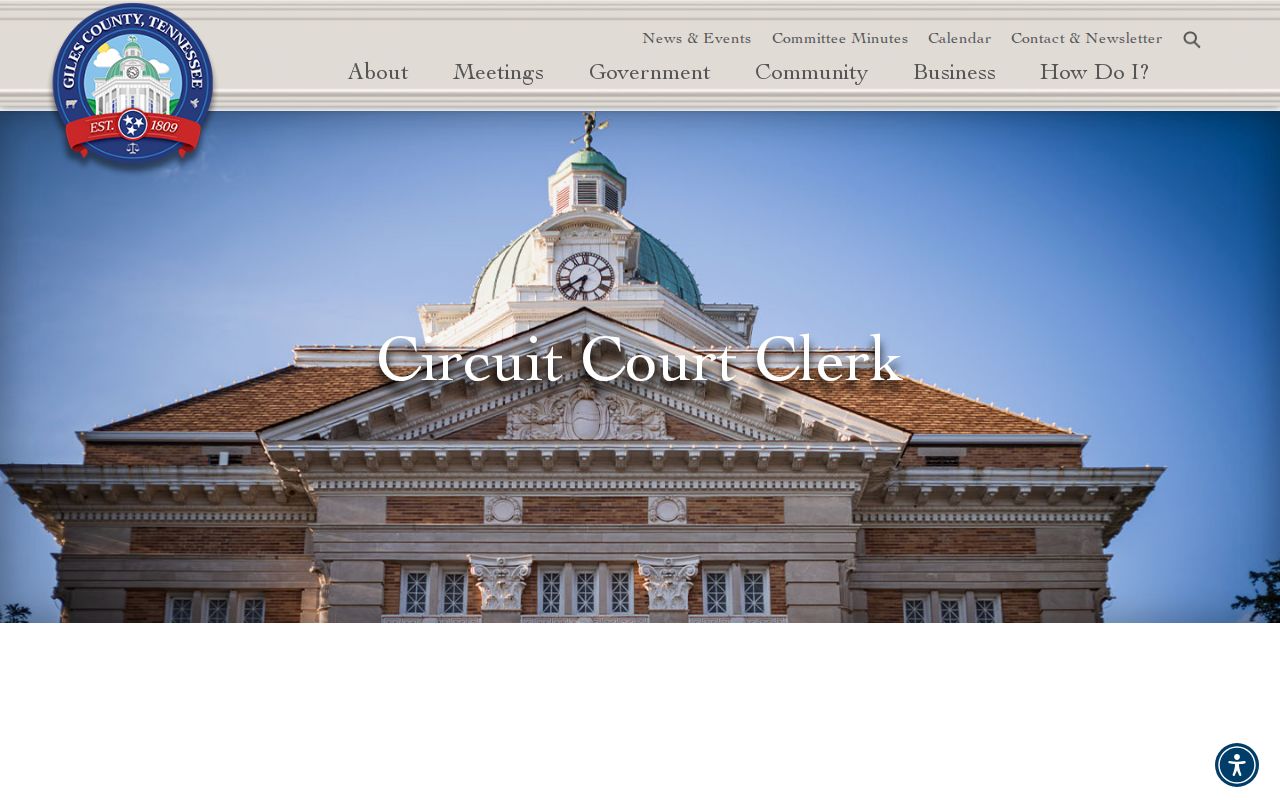
That page is the right source for current contact details, published schedules, and local notices before a courthouse visit.
Giles County Case Record Searches
Tennessee does not offer a comprehensive public search for trial-court cases, and Giles County has no verified public case-search interface. The working channel is a name or case-number request to the clerk by telephone or at the counter. Older files may require physical retrieval. A narrow request usually produces a more useful answer than asking for every paper connected to a name.
- Choose the likely court. Start with General Sessions for misdemeanors and early felony stages, or Circuit for an indicted felony and a Sessions appeal.
- Give the clerk a full name, alternate spelling, approximate filing or charge year, and case number when known. Supply a birth date privately if staff need it to distinguish common names.
- Ask for a clerk-generated docket sheet first. Use its entries to identify the exact complaint, indictment, order, judgment, or other document needed.
- Read each charge count separately. Confirm the filed offense, later amendments, status, disposition, and sentence instead of relying on the first charge listed.
- Request plain or certified copies only after the right case and document are identified. Confirm the copy quote and accepted payment channel with the clerk.
The clerk does not publish a web form, so these are the practical fields to have ready.
| Search Field | Format | Use | Notes |
|---|---|---|---|
| Full name | Text | Primary search | Bring alternate spellings or names used in the case. |
| Case number | Text | Best identifier | Separates one docket from other matters with a similar name. |
| Approximate year | Year or date range | Narrows retrieval | Especially useful for older and non-digitized records. |
| Court level | Sessions or Circuit | Routes the request | Ask staff to check both when a felony may have moved courts. |
| Birth date | Date | Match aid | Give it to the clerk when lawfully needed; do not publish it. |
No Giles Trial Court Portal
A payment page is not a docket search. The clerk links CourtFeePay for case obligations and accepts some payments by phone, but those channels do not replace the criminal file. They also do not establish what methods apply to copy charges. Ask for a copy estimate and accepted payment type before sending funds. Research documents cashier's check and money-order channels, while the clerk should confirm the current procedure for the exact request.
State court resources still help with court structure and appeals. The Tennessee Court of Criminal Appeals explains the appellate court that reviews criminal matters after the trial-court stage.
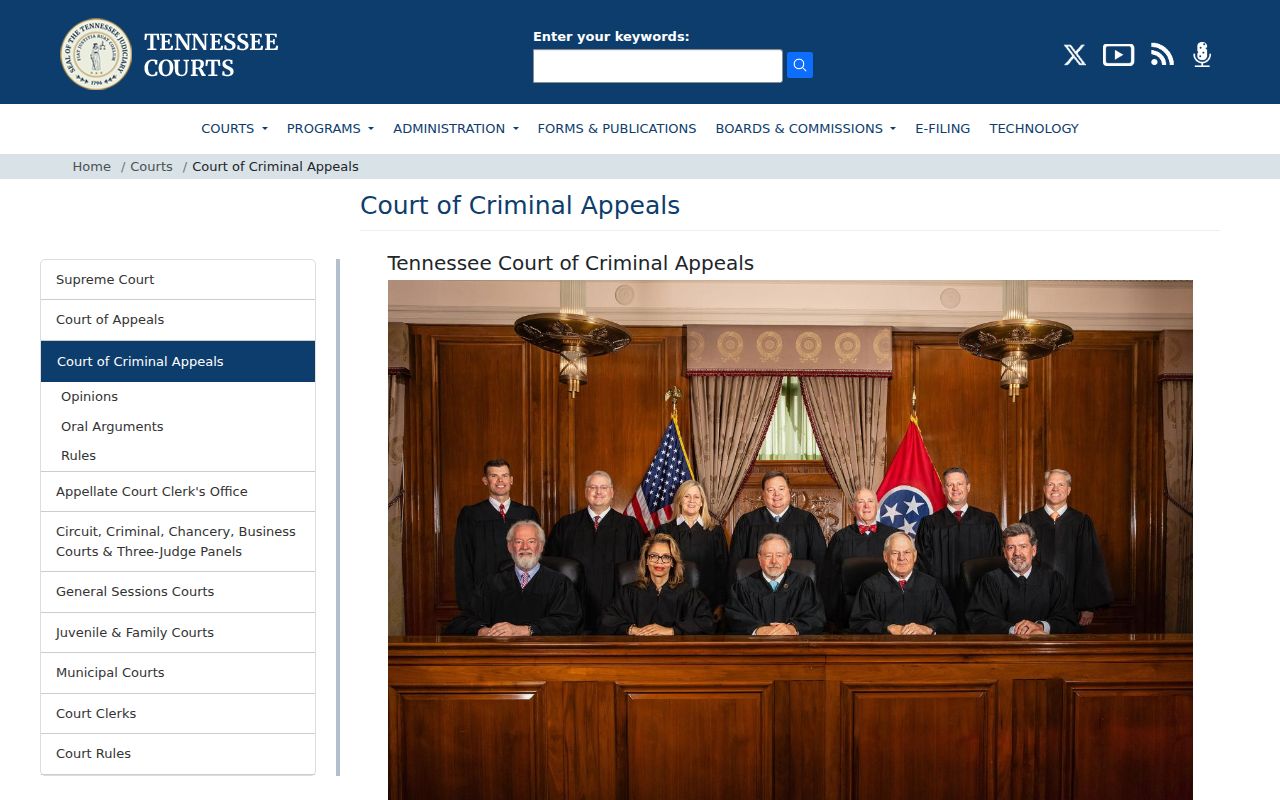
The appellate source is a separate layer. It does not replace the Giles County docket, judgment, or clerk-held trial file.
Note: A missing web result does not show that no Giles County criminal case exists.
What a Criminal Case File Contains
A Giles County case file is case-centered, not custody-centered. It can connect the filed charge to hearings, motions, pleas, a trial, and the final judgment. The docket sheet is the chronological index. The judgment is often the clearest source for the offense of conviction, class, sentence, jail credit, and whether multiple sentences run together or one after another.
| Case Number and Court | Identifies the docket, division, and court level holding the file. |
|---|---|
| Charging Document | May be a complaint, information, indictment, or citation stating the filed allegations. |
| Docket Entries | Chronological events such as filing, appearance, bind-over, indictment, motion, plea, trial, judgment, and capias. |
| Parties and Counsel | Shows the displayed defendant, judge, prosecutor, and defense counsel where public. |
| Bond and Hearings | Records release security, scheduled proceedings, and later changes entered by the court. |
| Disposition Per Count | Shows whether each count ended in conviction, acquittal, dismissal, nolle prosequi, or another result. |
| Sentence and Money | May show confinement, probation, fines, costs, restitution, payments, and sentence alignment. |
| Appeal and Documents | May identify a linked appeal and which filed images can be inspected or copied. |
Ask the clerk which fields are redacted and whether a filed image may be inspected or only copied. A public docket can identify an event without displaying every underlying document.
Reading a Giles Criminal Docket
Read the record count by count. A status such as “closed” or “disposed” means the clerk regards the case as administratively resolved. It does not itself mean there was a conviction. A nolle prosequi means the prosecutor ended that charge. A dismissal also ends a charge, while an acquittal is a not-guilty result after adjudication. An indictment is the grand jury's felony accusation, not proof of guilt.
- Bind-over
- The transfer of a felony matter from preliminary proceedings toward grand-jury review.
- True bill
- A grand-jury decision to indict; a no true bill means the grand jury declined indictment.
- Capias
- A court command to take a person into custody, sometimes tied to a missed appearance.
- Disposition
- The outcome of a charge, which must be checked for each count.
- Concurrent sentence
- Two or more sentences that run at the same time rather than one after another.
A bond ledger is also easy to misread. Bond is security for release, not a fine. Court costs and restitution occupy separate financial fields. When an abbreviation is unclear, ask for the judgment or have the clerk explain the document name needed.
Criminal Case Stages in Giles County
An arrest or sworn complaint starts the local court trail, but the route then depends on the charge. General Sessions can retain a misdemeanor through plea or trial. A felony receives preliminary handling there. If the matter is bound over and the grand jury returns an indictment, Circuit Court opens the felony-trial phase. Arraignment records the plea. Discovery, motions, negotiations, or trial follow before a disposition and sentence.
Case flow: Charges Filed › Arraignment › Pretrial › Plea or Trial › Disposition › Sentencing
A sentence may be entered with the disposition or set for another date. A later notice of appeal creates an appellate record, but the original Giles County file still supplies the local charging and judgment documents. For the earlier custody event rather than the filed case, use the county's Giles County arrest search channels.
Giles Municipal or County Case
The issuing agency and offense type determine the first stop. A Pulaski, Ardmore, or Elkton ordinance matter may remain with that city's court. A state misdemeanor belongs in General Sessions, and an indicted felony proceeds in Circuit. One incident can generate both a city citation and a county criminal docket, so finding one file does not guarantee that every related charge appears there.
Ardmore requires extra care because the city spans Giles and Lincoln Counties. Confirm where the event occurred and which county handled custody. A mailing address alone cannot identify the proper clerk. For all three city courts, no verified online municipal case lookup was found. Call the city clerk with the name, citation number, date, and other identifier requested by that office.
Access Rules for Case Records
Tennessee Supreme Court Rule 34 governs public access and electronic access to court records. The official Rule 34 source sets the statewide framework, but local trial records still remain with the Giles County clerk.
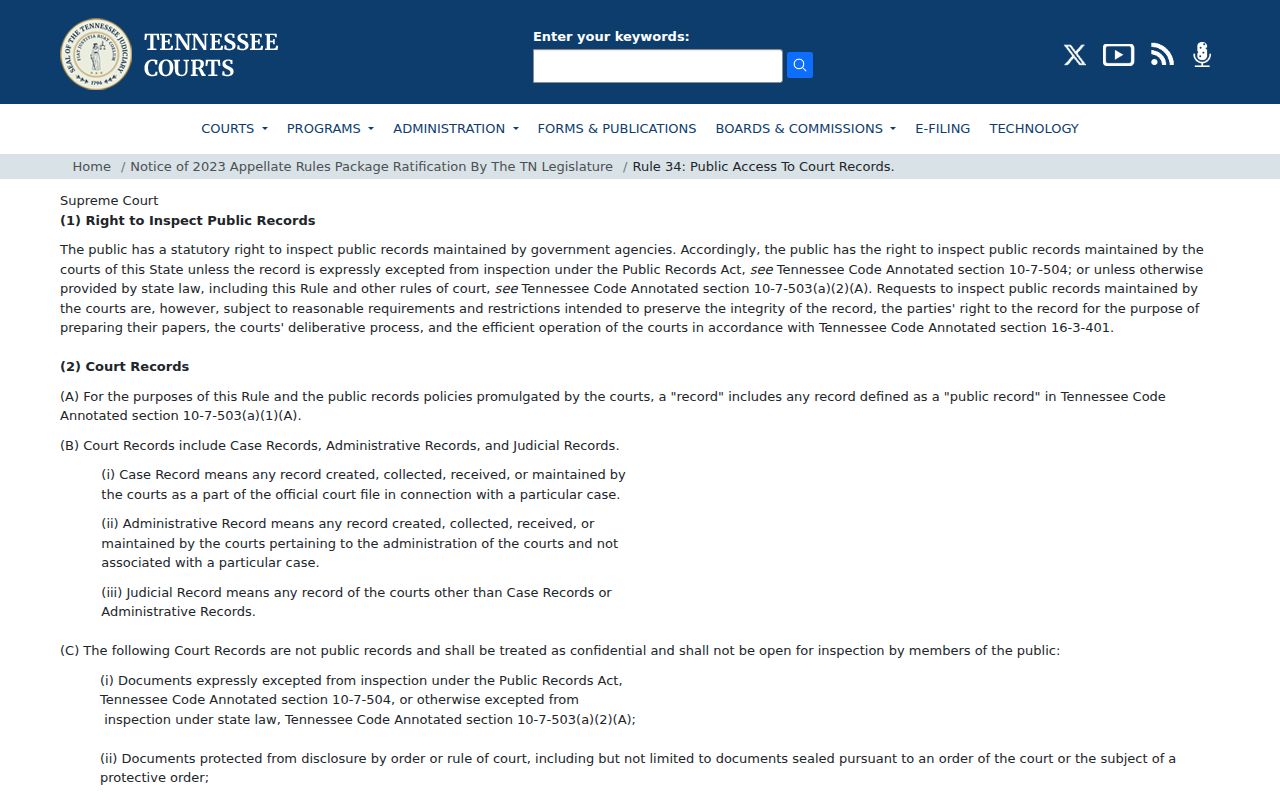
The rule helps explain why open access can coexist with redaction, confidentiality, and limits on electronic display.
Juvenile files are confidential except where law permits access or a youth was transferred for adult prosecution. Clerks may also protect Social Security numbers, financial accounts, minor or victim identifiers, protected addresses, and sealed material. A public docket can omit or redact fields found in a controlled court file. Ask whether a document may be inspected, copied, or withheld and request the legal basis when access is denied.
Choose the Right Giles Court Copy
A docket sheet is the most efficient first copy. It maps dates and entries, then lets the reader request the exact judgment, indictment, plea order, or other filed item. A certified copy adds the clerk's official authentication when one is needed. A full-file request can cost more and include pages that do not answer the question. Confirm certification and copy prices before ordering because the research does not publish a fixed current copy schedule.
Federal proceedings use a different system. Giles County lies in the U.S. District Court for the Middle District of Tennessee. The Middle District's official site identifies the federal court, while local Tennessee charges remain in the county clerk's files.
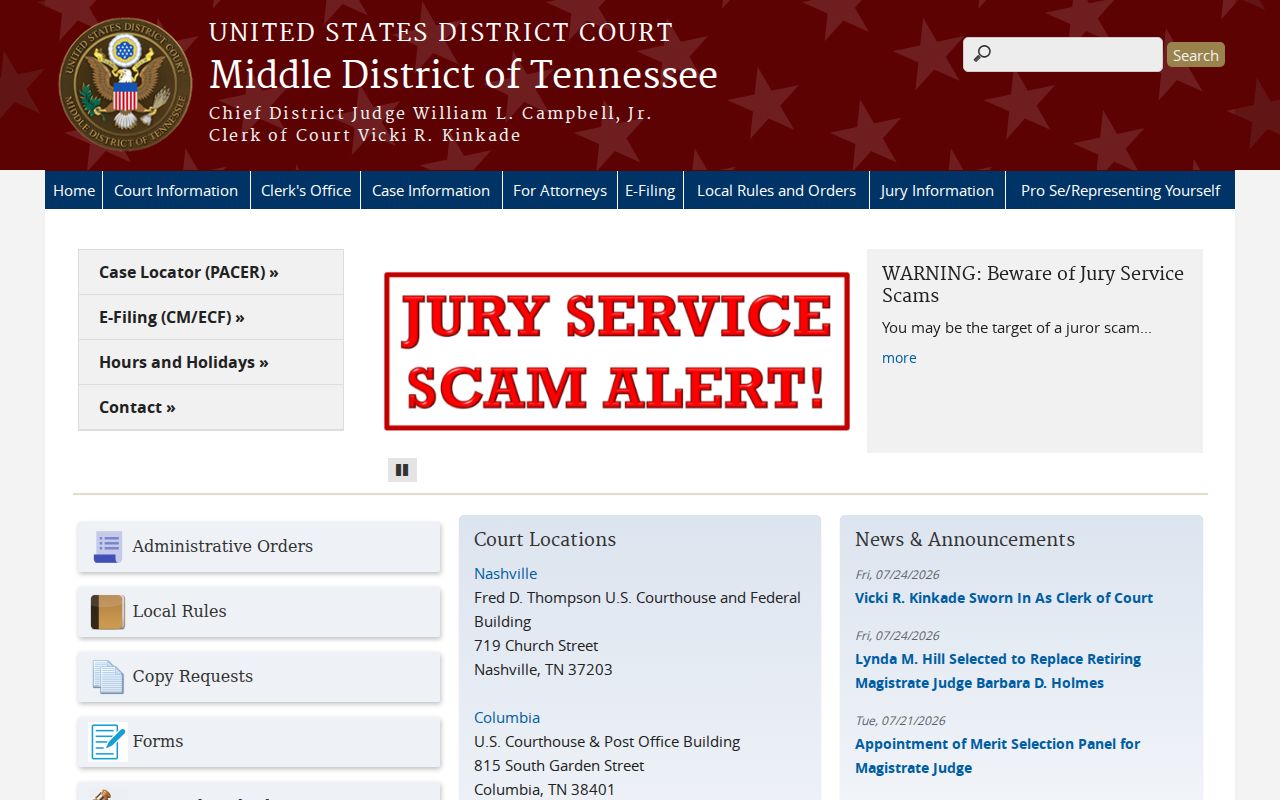
This distinction prevents a federal docket search from being mistaken for a Giles County trial-court search.
PACER is the official federal docket channel after registration.
PACER can supply federal docket entries and documents, but it cannot find a Giles General Sessions or Circuit case.